
Tirta Empul Temple Bali: Discover the Sacred Holy Springs and Traditional Melukat Ritual
Tirta Empul Temple is one of Bali’s most remarkable cultural landmarks, offering visitors a unique glimpse into the island’s spiritual traditions and Hindu heritage. Located in Manukaya Village, Tampaksiring, Gianyar Regency, this ancient temple is widely known for its sacred natural springs, beautiful traditional architecture, and centuries-old water purification ceremonies.
Unlike ordinary tourist attractions, Tirta Empul remains an active place of worship where Balinese Hindus come to pray, make offerings, and perform spiritual cleansing rituals. Its most distinctive attraction is the holy bathing complex, where visitors can observe or experience the traditional purification ceremony known as Melukat.
Surrounded by tropical greenery and the peaceful atmosphere of the Balinese countryside, Tirta Empul Temple is an excellent destination for travelers interested in culture, history, religion, and authentic local experiences.
The History and Cultural Significance of Tirta Empul Temple

Tirta Empul Temple has a history dating back to approximately 962 AD, during the reign of the Warmadewa dynasty. Built around a natural spring believed to possess sacred properties, the temple has served as an important spiritual center for the Balinese Hindu community for more than a thousand years.
The temple is closely connected to the Hindu god Indra and the legendary story of King Mayadenawa. According to Balinese mythology, Mayadenawa was a powerful ruler who opposed religious worship and prevented people from performing their spiritual practices.
In response, Lord Indra created a sacred spring containing healing water to restore and protect his followers. This legendary source of holy water became the foundation of what is now known as Tirta Empul.
For generations, Balinese Hindus have visited this sacred site to seek blessings, perform religious ceremonies, and purify themselves spiritually. The water is traditionally believed to cleanse negative influences, bring spiritual harmony, and restore balance between the body, mind, and soul.
Today, Tirta Empul continues to play an important role in Balinese religious life while welcoming travelers from around the world who wish to learn more about the island’s unique cultural identity.
The Sacred Holy Springs and Melukat Purification Ceremony
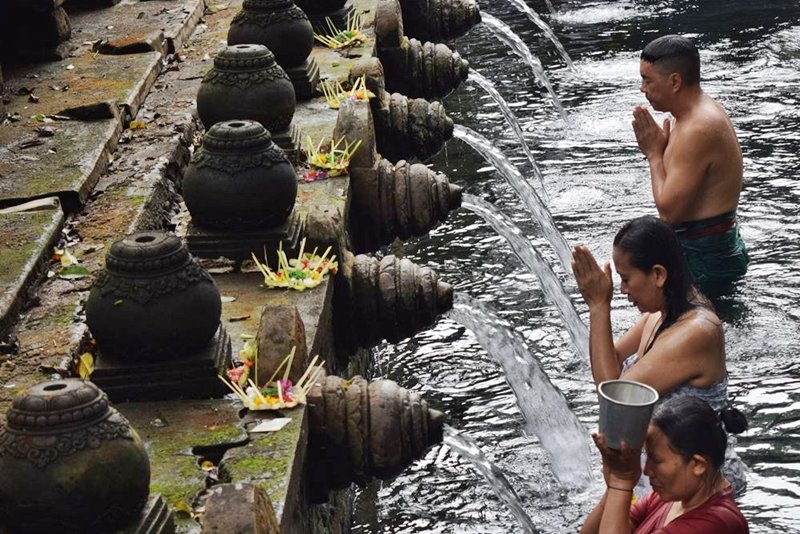
The main highlight of Tirta Empul Temple is its sacred bathing complex, featuring several stone fountains supplied by a natural underground spring. Fresh water continuously flows from these beautifully carved fountains into large bathing pools.
This is where the traditional Balinese Hindu purification ceremony, known as Melukat, takes place.
Melukat is a spiritual cleansing ritual intended to purify the mind and soul, remove negative energy, and invite positive blessings. During the ceremony, participants move from one designated fountain to another, allowing the holy water to flow over their heads and bodies while offering prayers.
Each fountain is traditionally associated with particular spiritual purposes and blessings. However, some water outlets are reserved for specific religious ceremonies and are not intended for general visitors.
For travelers interested in participating, it is important to understand that Melukat is more than a cultural activity or bathing experience. It is a meaningful religious tradition that deserves respect.
Visitors should always follow the instructions provided by temple staff or local guides to ensure that the ceremony is performed appropriately.
Exploring the Three Main Areas of Tirta Empul Temple
Like many traditional Balinese Hindu temples, Tirta Empul is organized into several courtyards, each serving a different function within the temple complex.
Understanding these areas will help visitors appreciate the temple’s architecture and religious significance.
1. Jaba Pura – The Outer Courtyard
Jaba Pura is the outer section of the temple and serves as the main entrance area. Visitors can admire traditional Balinese stone gateways, architectural details, and landscaped surroundings.
This courtyard provides a welcoming introduction to the temple complex and offers an opportunity to appreciate the craftsmanship of traditional Balinese architecture.
2. Jaba Tengah – The Central Courtyard
Jaba Tengah is the most popular area of Tirta Empul Temple and the location of its famous purification pools.
Here, visitors will find rows of stone fountains releasing sacred spring water into large bathing pools. Balinese Hindus and visitors participating in Melukat can be seen following the traditional purification sequence.
Even if you do not wish to participate in the ritual, watching the ceremony from an appropriate area offers valuable insight into Balinese spiritual traditions.
3. Jeroan – The Inner Courtyard
Jeroan is the innermost and most sacred section of the temple.
This area contains traditional shrines and worship structures dedicated to Hindu deities. It is primarily used by Balinese Hindus for prayer, offerings, and religious ceremonies.
Visitors should maintain a respectful attitude and observe any restrictions regarding access to particular sections of this sacred courtyard.
Top Attractions and Things to See at Tirta Empul
Beyond its famous purification ceremony, Tirta Empul Temple offers several interesting features that make it worth exploring.
Natural Holy Springs
The sacred springs are the spiritual heart of the temple. These natural water sources continuously supply the purification fountains and hold great religious significance for the local Hindu community.
Traditional Balinese Architecture
Take time to admire the intricately carved stone gateways, traditional shrines, statues, and temple courtyards. These architectural elements reflect Bali’s distinctive artistic and religious heritage.
Sacred Purification Pools
The bathing pools are undoubtedly the temple’s most recognizable feature. Visitors can observe the Melukat ceremony and learn about the spiritual meaning behind each stage of the purification process.
Koi Fish Ponds
Several ornamental ponds add to the peaceful atmosphere of the temple. Their clear water and colorful koi fish provide a pleasant contrast to the surrounding stone architecture.
Hindu Shrines and Religious Structures
The temple contains various shrines and sacred structures used for traditional Hindu worship. Their designs and arrangements provide an interesting look into Balinese religious architecture.
Beautiful Natural Surroundings
The surrounding tropical vegetation, green landscapes, and peaceful village atmosphere make Tirta Empul a relaxing place to explore while discovering Bali’s cultural heritage.
How to Experience the Melukat Ritual at Tirta Empul
For visitors who want a deeper cultural experience, participating in the Melukat purification ceremony can be one of the most memorable parts of a trip to Bali.
Although the process is relatively straightforward, it is important to understand and respect the religious traditions involved.
Here is a general guide to the experience:
- Prepare a Traditional Offering: Balinese worshippers commonly prepare a small offering called Canang Sari before beginning their prayers and purification ceremony.
- Wear Appropriate Ritual Clothing: Visitors entering the sacred bathing pools must wear the appropriate bathing sarong. Follow the temple’s instructions regarding clothing and changing facilities.
- Begin the Purification Process: Enter the designated bathing area and follow the recommended sequence of fountains. Participants traditionally offer prayers or take a moment for reflection at each water outlet.
- Respect Religious Restrictions: Not every fountain is available for general purification. Some are reserved for specific ceremonies, so always follow the instructions of temple staff or local religious guides.
- Finish and Change Clothes: Once the ritual is complete, use the available changing facilities to dry off and change into clean clothing.
Keep in mind that participating in Melukat is entirely optional. Visitors can still enjoy the temple’s architecture, explore its courtyards, and observe religious activities without entering the bathing pools.
Tirta Empul Temple Location and How to Get There
Tirta Empul Temple is located in Manukaya Village, Tampaksiring District, Gianyar Regency, in central Bali. The temple is approximately 15 kilometers northeast of Ubud, making it a convenient destination for a cultural day trip.
The temple can be reached by private car, motorbike, or an organized sightseeing tour. Many travelers combine their visit with other popular attractions in the Ubud, Tegallalang, and Kintamani areas.
Approximate travel times from several popular destinations include:
- Ubud: 30–40 minutes.
- Tegallalang Rice Terraces: 20–30 minutes.
- Kintamani: 40–60 minutes.
- Sanur: 1–1.5 hours.
- Kuta and Seminyak: 1.5–2 hours.
- Ngurah Rai International Airport: Approximately 1.5–2 hours.
Actual journey times may vary depending on traffic and road conditions.
One of the most comfortable ways to visit Tirta Empul is by arranging a private car with a local driver. This option allows you to travel at your own pace and visit several nearby attractions without worrying about transportation.
Dress Code and Important Rules for Visitors
Since Tirta Empul is an active Hindu temple, visitors are expected to respect Balinese religious customs and follow the temple’s regulations.
Before entering the temple, keep the following guidelines in mind:
- Wear modest clothing that covers your shoulders and knees.
- Use the traditional sarong and waist sash required by the temple.
- According to Balinese Hindu customs, women who are menstruating should not enter sacred temple areas.
- Never use soap, shampoo, or other personal hygiene products in the holy bathing pools.
- Do not wash clothes in the sacred spring water.
- Avoid disturbing people who are praying or performing religious ceremonies.
- Always ask permission before photographing worshippers.
- Follow the designated route and avoid fountains reserved for particular religious rituals.
- Bring a towel and an extra set of clothes if you plan to participate in Melukat.
These guidelines help maintain the temple’s sacred atmosphere and ensure that visitors can experience Balinese culture in a respectful manner.
Best Time to Visit Tirta Empul Temple
Morning is generally the best time to explore Tirta Empul Temple, especially between 8:00 AM and 10:00 AM.
During these hours, the weather is usually cooler, and the temple atmosphere can be more peaceful before larger groups of tourists arrive.
An early visit is particularly recommended for travelers planning to participate in Melukat, as the bathing pools may become busier later in the day.
Another interesting time to visit is during important Balinese Hindu religious celebrations, including full moon occasions and other ceremonial days. These events provide opportunities to observe local spiritual traditions and community activities.
However, visitor numbers may increase during major religious occasions, so expect a potentially busier atmosphere.
Most travelers should allow approximately one to two hours to explore the temple grounds, appreciate the architecture, and experience the purification ceremony if desired.
Nearby Attractions to Visit Around Tirta Empul Temple
Tirta Empul is strategically located near several popular cultural and natural attractions in central Bali. This makes it easy to include the temple as part of a full-day sightseeing itinerary.
Here are five interesting destinations you can consider visiting after exploring Tirta Empul.
1. Gunung Kawi Temple
Gunung Kawi Temple is an impressive historical archaeological complex featuring monumental stone shrines carved directly into towering rock cliffs.
Surrounded by rice fields, tropical vegetation, and a peaceful river valley, this ancient site offers a fascinating look into Bali’s historical and architectural heritage.
2. Tegallalang Rice Terraces
The Tegallalang Rice Terraces are among the most photographed landscapes in Bali.
Known for their beautiful green rice paddies and traditional Subak irrigation system, these terraces offer spectacular countryside scenery and excellent photography opportunities.
3. Kintamani and Mount Batur
Kintamani is a beautiful highland destination in northern Bali, famous for its panoramic views of Mount Batur and Lake Batur.
The cooler mountain atmosphere makes it a refreshing place to visit after exploring the cultural attractions of Tampaksiring and Ubud.
4. Penglipuran Traditional Village
Penglipuran Village is a well-preserved traditional Balinese village known for its beautiful residential architecture, organized streets, and peaceful atmosphere.
Walking through the village provides an opportunity to discover traditional Balinese community life and local architectural traditions.
5. Goa Gajah Elephant Cave
Goa Gajah, also known as the Elephant Cave, is an important archaeological destination featuring a distinctive carved cave entrance, ancient bathing pools, and historical Hindu-Buddhist influences.
Its unique stone carvings and historical atmosphere make it an interesting addition to a cultural sightseeing trip around Gianyar.
Tirta Empul Temple Entrance Fee and Visitor Information
Before planning your visit, it is useful to know the general admission costs, operating hours, and available facilities.
The following figures are indicative prices based on the supplied visitor information and should be confirmed at the temple entrance before your trip.
| Visitor Information | Details |
|---|---|
| Adult Entrance Fee | IDR 75,000 per person |
| Children (5–12 years) | IDR 50,000 per person |
| Children Under 5 | Free admission |
| Opening Hours | Daily, 8:00 AM – 6:00 PM |
| Temple Attire | Sarong and waist sash required |
| Melukat Sarong and Locker | Approximately IDR 10,000–30,000 |
| Parking | Free or approximately IDR 5,000 for cars |
Temple attire, including a sarong and waist sash, is generally provided or included with the admission ticket.
Visitors planning to participate in Melukat may need to rent a separate bathing sarong and locker, depending on the available facilities and current arrangements.
Please note that admission prices, rental charges, and parking fees may change without prior notice. It is always advisable to check the latest information directly at the ticket counter.
Why Should You Visit Tirta Empul Temple in Bali?
Tirta Empul Temple is much more than a beautiful historical attraction. It is a living representation of Bali’s spiritual traditions, cultural identity, and religious heritage.
From its ancient history and sacred natural springs to the traditional Melukat purification ceremony, every part of the temple offers an opportunity to understand the importance of spirituality in everyday Balinese life.
Whether you are fascinated by traditional architecture, interested in Hindu culture, or simply looking for a meaningful cultural experience during your Bali holiday, Tirta Empul is a destination worth including in your itinerary.
Its peaceful surroundings, beautiful stone carvings, sacred bathing pools, and centuries-old traditions create an experience that is both educational and memorable.
For anyone exploring Ubud and central Bali, Tirta Empul Temple is undoubtedly one of the cultural highlights that should not be missed.
For day or half day tour bookings to the Place please contact Ketut Maryana at DriversBali.com
Phone/WhatsApp: +62 812-3977-705 (Mr. Ketut Maryana)
Website: https://driversbali.com