
Friday | 22 May 2026
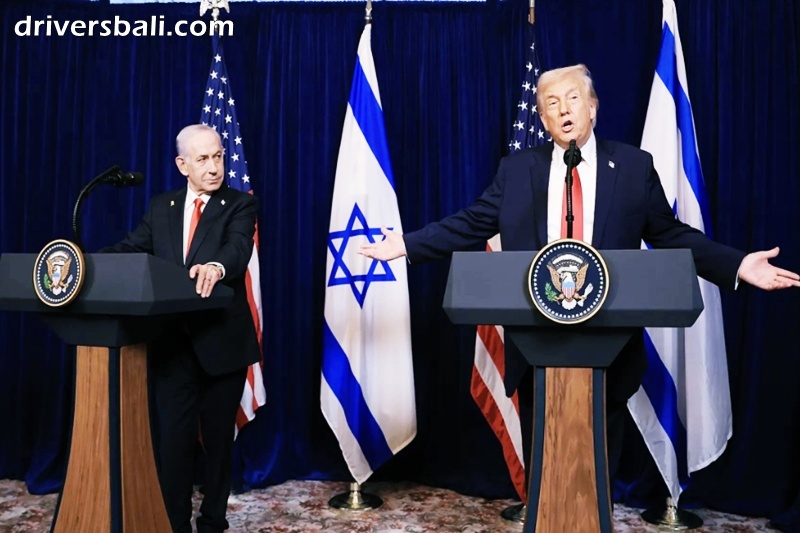
Tensions between US President Donald Trump and Israeli Prime Minister Benjamin Netanyahu reportedly escalated this week as the two leaders clashed over how to handle the ongoing conflict involving Iran. According to a US official cited by CNN, the pair held a difficult and tense phone conversation on Tuesday that highlighted growing differences between Washington and Tel Aviv over whether diplomacy or military action should take priority.
The disagreement did not emerge overnight. Trump and Netanyahu had already spoken several times in recent days as discussions intensified over possible American military action targeting Iran. During a conversation on Sunday, Trump reportedly informed Netanyahu that the United States was preparing to move ahead with a new series of targeted strikes against Iran early in the week. The operation, according to previous CNN reporting, was expected to carry the name “Operation Sledgehammer.”
At the time, many Israeli officials believed the United States was finally prepared to adopt a tougher military stance against Tehran. However, only about a day later, Trump unexpectedly changed direction. The US president publicly announced that the planned attacks scheduled for Tuesday would be postponed following requests from key Gulf allies, namely Qatar, Saudi Arabia, and the United Arab Emirates.
The decision reportedly surprised and frustrated Netanyahu, who has consistently argued that Iran should be confronted aggressively and without delay. According to US and Israeli sources, the Israeli prime minister believes every pause in military pressure gives Iran more time to strengthen its strategic position, continue uranium enrichment activities, and buy time diplomatically.
Behind the scenes, Gulf nations had apparently been engaging in intense diplomatic efforts with the White House and Pakistani intermediaries in hopes of establishing a framework for renewed negotiations between Washington and Tehran. Those talks have focused on finding a pathway toward de-escalation and potentially reviving broader diplomatic agreements surrounding Iran’s nuclear activities.
Speaking to reporters on Wednesday morning, Trump signaled that negotiations with Iran were approaching a critical stage.
“We’re in the final stages of Iran. We’ll see what happens,” Trump said, suggesting that diplomacy still had a chance to succeed.
The president also issued a warning, indicating that military force remained on the table if negotiations collapsed.
“We’ll either have a deal or we’re going to do some things that are a little bit nasty,” Trump stated. “But hopefully that won’t happen.”
Netanyahu, however, reportedly used Tuesday’s hour-long call to express strong dissatisfaction with Trump’s decision to delay the strikes. According to a US official, the Israeli leader bluntly told Trump that postponing military action was a mistake and urged him to proceed with the attacks as originally planned.
Israeli officials remain deeply skeptical that diplomacy with Tehran will produce meaningful concessions. One major sticking point continues to be Iran’s enriched uranium stockpile. Israeli sources say Iran has thus far refused to surrender or transfer its near-weapons-grade uranium reserves, something Washington considers essential for any agreement.
An Israeli official familiar with the discussions said the divide between the two leaders was increasingly obvious. Trump appears determined to test whether diplomacy can still work, while Netanyahu had expected a much more forceful American military response.
Further complicating matters, Reuters reported — citing unnamed senior Iranian sources — that Iranian Supreme Leader Mojtaba Khamenei had ordered that Iran’s highly enriched uranium stockpile must not be sent abroad under any future agreement. However, a US official later stated that no such directive had officially reached the White House as of Thursday morning.
Iran publicly dismissed many of the circulating reports. Iranian Foreign Ministry spokesperson Esmaeil Baghaei said speculation regarding uranium enrichment levels and nuclear negotiations was largely driven by media rumors rather than reality.
According to Iran’s official IRNA news agency, Baghaei stated that none of the reports suggesting a diplomatic breakthrough between Tehran and Washington should be considered credible at this stage.
Meanwhile, Trump made clear that the United States would not allow Iran to retain highly enriched uranium under any future arrangement.
“No, no, we get the highly enriched. We will get it,” Trump told reporters Thursday.
“We don’t need it; we don’t want it,” he added. “We’ll probably destroy it after we get it, but we’re not going to let them have it.”
The growing frustration is not limited to Netanyahu alone. According to another Israeli source, senior figures within the Israeli government are increasingly impatient with what they view as Iran’s strategy of delaying and prolonging negotiations while avoiding real concessions. There is reportedly strong support among Israeli leadership circles for renewed military operations against Tehran.
Still, sources familiar with US-Israel discussions say these tensions are not entirely new. American officials have privately acknowledged for months that Washington and Tel Aviv do not share identical goals regarding Iran. While Israel prioritizes eliminating long-term security threats through pressure and military deterrence, Trump has repeatedly signaled his preference for securing what he considers a “better deal” through negotiations — even while keeping military options available.
Asked Wednesday about his latest conversation with Netanyahu, Trump projected confidence and authority over the situation.
“He’ll do whatever I want him to do,” Trump said, suggesting he remains firmly in control of US-Israel coordination.
Despite pressure from Israel, Trump continues to argue that diplomacy deserves more time. He told reporters the situation with Iran was “right on the borderline” and suggested that if additional negotiations could save lives and avoid war, they were worth pursuing.
Iran, for its part, confirmed that indirect communication with Washington remains ongoing. Baghaei stated Wednesday that Tehran and Washington have continued exchanging messages through Pakistani mediation channels.
According to Iran’s state-affiliated Nour News outlet, Baghaei explained that Iran had submitted an initial 14-point framework and was currently reviewing American responses and counterproposals.
Pakistan has emerged as a key intermediary throughout the crisis. The country previously hosted high-level discussions between US Vice President JD Vance and Iranian Parliament Speaker Mohammad Bagher Ghalibaf in April as part of broader efforts to reduce tensions.
US Secretary of State Marco Rubio also expressed cautious optimism Thursday before departing for diplomatic visits to Sweden and India.
“There’s some good signs, but I don’t want to be overly optimistic,” Rubio told reporters.
“If we can get a good deal done, that would be great. I’m not here to tell you that it’s going to happen for sure,” he added.
Even so, major disagreements remain unresolved. Regional sources say Iran has not retreated from its central demands, particularly concerning its nuclear program and access to frozen financial assets abroad.
At the same time, Trump has continued to remind both allies and adversaries that the threat of military action remains very real if negotiations fail. “If we don’t get the right answers, it goes very quickly. We’re all ready to go,” Trump warned Wednesday.